
How Can We Work Together to Balance Public Access and Neighborhood Livability at George Rogers Park?

Updated: Jul 20

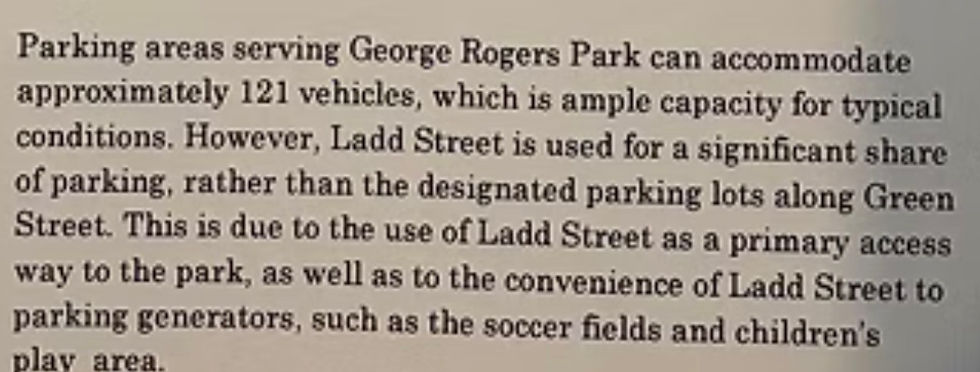
George Rogers Park is one of Lake Oswego’s most valued public spaces. There are only 121 parking spaces. During the summer—especially on hot evenings and weekends—the park regularly exceeds its parking capacity. As a result, Old Town becomes the overflow parking lot, creating significant impacts on neighborhood livability, safety, and access. Our ask of the City Leaders is for a specific one to two year plan to eliminate the strain on Old Town.
Also City Leaders, before investing so much time and money in developing Foothills Park, please consider what funding is needed to maintain and update George Rogers Park.
Summary of Short Term Priorities for Summer 2026
These are the short-term (summer 2026) priorities from our Old Town Neighborhood Association Board.
Keep doing what has already made a difference:
Continue increased Police/CSO patrols and parking enforcement (They're doing a GREAT job!)
Continue investing in GRP maintenance (Rick & Josh are GREAT)
Communication on the path construction (Yay to Kyra!)
Take practical operational steps this summer to better manage parking, traffic, and visitor demand.
"Tweaks" on Furnace Street to make it clear where people are to park/not park
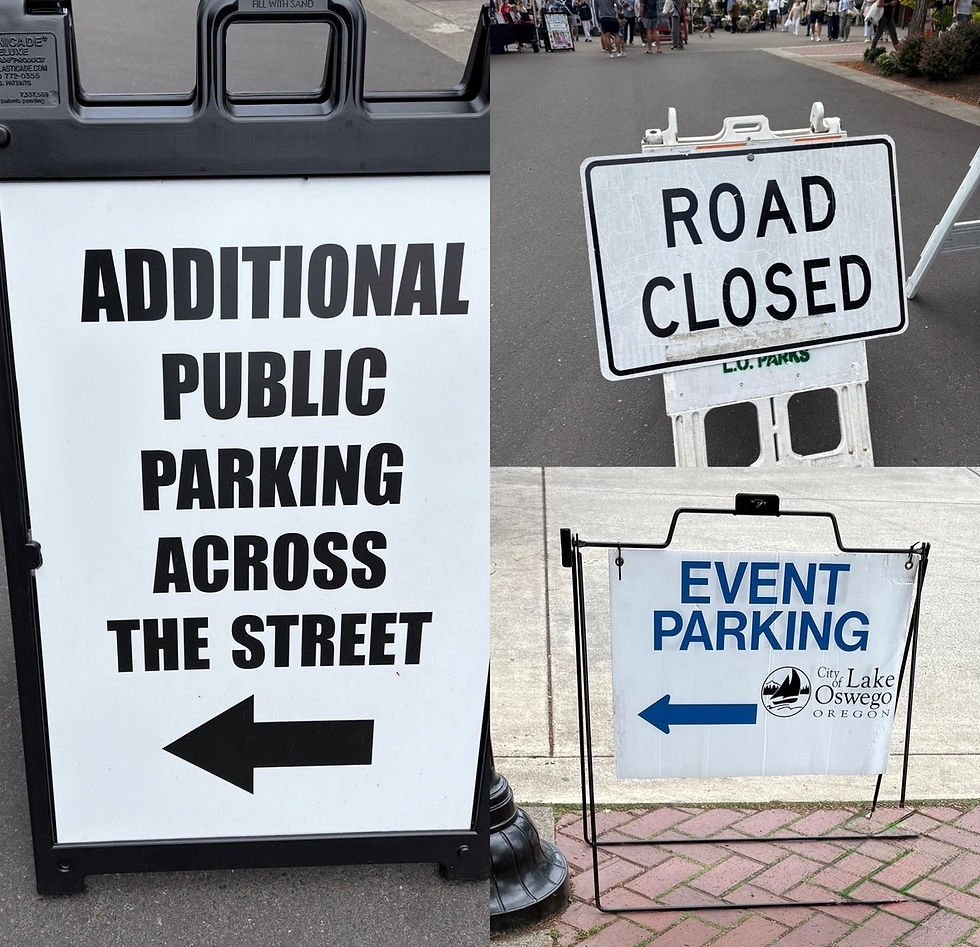
Start using "Parking Lot Full" signs at Green, Ladd and Wilbur
Stop rentals of the large picnic shelter Friday - Sunday in the summer
Reduce planned Park programming that requires parking Friday - Sunday in the summer
Promote alternative river access locations (Roehr Park, Foothills Park, Tryon Cove, Oswego Lake) through all social media, signage and public information.
Start talking to LOPD now about their advice on changing the ordinance about people not being able to sleep in cars/vehicles near the park
Clarify contract with Alder Creek Rentals and when it will renew.
Develop plans for next summer
We'll hold off on these discussions until the fall to impact May 2027 summer
See the full list of all the "asks" from our neighborhood board in this blog post.
Start "getting in the cue" for longer term projects
Progress We’ve Made Together
Over the past year, the Old Town Neighborhood Association (OTNA) has worked collaboratively with the City to address these concerns. We appreciate the progress that has been made and want to recognize those efforts.
Increased Parking Enforcement

Community Service Officers and Lake Oswego Police have significantly increased patrols in Old Town during peak summer periods. Illegal parking citations are being issued, and officers have been responsive to non-emergency calls as well as proactive on high-demand days. This enforcement has helped, and we appreciate the City’s partnership.
Parks & Recreation Improvements
Parks & Recreation implemented OTNA recommendations:
Added designated drop-off and pick-up spaces in the lower George Rogers Park lot.
Improved safety by installing an air pump station in the lower parking area, allowing people a way to stay off roads and sidewalks while inflating paddle boards.
Fixed the tennis courts so they are usable. They were patched, not repaved because of budget constraints.
These are practical inexpensive improvements the City made that directly address neighborhood concerns.

New Beautiful Picnic Structure and New Bathrooms at GRP
Our neighbors who were part of the Historical Society advocated for the picnic shelter to look as architecturally good as the rest of the lower Park. Parks & Rec also remodeled the bathrooms at lower GRP near the river.

Safety Improvements on Furnace Street

After repeated requests in May 2025 and May 2026, the City installed no-parking signage on Furnace Street between Ladd and Wilbur.
This section had become a dangerous bottleneck for:
Two-way vehicle traffic
Pedestrians walking in the roadway
Cyclists navigating narrow space
Residents entering and exiting driveways
This was an important step toward improving safety and improving livability for neighbors whose homes are on Furnace Street. More signs may need to be added to make it clear to park visitors where they cannot park. Now some people are parking in areas intended to be no parking.
Extending the riverfront pathway from GRP to Roehr Park
The new $1.76 million Willamette River Greenway Trail is being constructed this summer. This project has been funded through a collaborative mix of regional bond dollars, local city funds, and county tourism grants Willamette River Greenway Trail. Unfortunately, the plan did not consider nor include parking and traffic management. The assumption Parks & Rec has made is that people will park at Foothills Park and ride their bikes or walk from there. That may be the case. It may also be the case that the river pathway offers another reason for people to visit and park at GRP.
What Still Needs to Be Addressed
There are only 121 parking spaces in GRP and many of them are handicap and two are 5 minute drop off spots. This map from the 2002 GRP Master plan shows where the parking spaces are. Many are up the hill near the fields so people going to "the beach" Park in Old Town neighborhood and use Ladd and Wilbur Streets to access the park.

At our June OTNA Board meeting, we identified several priority areas where additional City action is needed to restore livability while preserving public access to George Rogers Park.
1. Reevaluate the Alder Creek Rental Program
We remain concerned that Alder Creek rentals continue to operate at George Rogers Park during peak summer months, despite existing overcrowding and parking shortages.
We request:
Full transparency regarding the City’s agreement with Alder Creek, including contract terms, renewal dates, and revenue.
Data on the number of rentals each week. Each rental typically means at least 1 car that needs to park.
Ongoing reporting for the 2026 season to evaluate program impacts.
Given current capacity constraints, OTNA does not support renewing this contract in 2027 without substantial parking mitigation.

2. Distribute Recreational Use Across More Parks
George Rogers Park should not carry the entire burden of river recreation access.
We recommend the City actively promote alternative launch sites, including:
Roehr Park has a boat launch for kayaks and SUPs
Foothills Park has a large dock
Tryon Creek Cove Park has a boat launch.
Oswego Lake is also now public for SUPs and kayaks
This distribution plan for park visitors should include:
Better signage from the parking lot near Foothills and the commercial buildings to identify Roehr Park and the boat launch area
Public education campaigns
Paddleboard launch information for other parks than GRP
The goal is not to discourage use of GRP — but to distribute it based on parking availability at the other City Parks.
At the same time, we ask the City to stop marketing George Rogers Park as a “destination park” and for river access, as its infrastructure was never designed for that level of regional demand.
Parks & Rec, we ask you to please put together a practical plan to share with OTNA about how you will distribute visitors to the water access Parks in LO this summer and next summer.
3. Limit Picnic Shelter Rentals During Peak Weekends
This request was first made in May 2025 and remains unresolved.
George Rogers Park currently offers two reservable picnic shelters for groups of up to 50 and 75 people, with rentals available in three-hour blocks from 9 a.m. to 8 p.m. throughout the summer. There are a total of 121 parking spaces in the park. The closest parking for both picnic shelters is in the neighborhood.
The cost for a 3 hour block rental is $90 for LO residents and $135 for non residents. Food Trucks are allowed at the lower shelter.
While these rentals provide valuable community space, they also add significant parking demand during peak weekends—often at times when the park is already over capacity.
OTNA is asking the City to suspend or limit shelter rentals during the busiest summer weekends until a parking management plan is in place. We continue to request suspension of picnic shelter rentals near Furnace Street from Friday afternoons through Sunday evenings during peak summer weekends.
4. Create a Summer Traffic Management Plan
The City needs a formal summer management strategy for George Rogers Park.
We recommend:
“Parking Lot Full” signage at key neighborhood entry points
Coordination between Police, CSOs, and Park Rangers
Real-time capacity monitoring
Share the data from Placer AI (or whatever organization is now being used by Parks & Rec) to identify the number of people coming into GRP May - August. Use this data to manage the park so there is enough parking at GRP for visitors.
Share the data on the number of tickets given in Old Town May - August.
Traffic flow planning for 2027
Reduce or eliminate Parks & Rec "programming" during peak use times for people coming for "the beach"
Other cities routinely implement seasonal traffic plans for popular recreational destinations. Lake Oswego should do the same.
5. Revisit the 2002 George Rogers Park Master Plan
Many of today’s issues were identified more than 20 years ago.

We ask Parks staff and the Parks Advisory Board to review the 2002 Master Plan, which anticipated:
Traffic congestion
Parking shortages
Circulation conflicts
Neighborhood impacts
Many proposed solutions were never funded or implemented.
This is an opportunity to revisit prior planning work rather than start from scratch.
Another idea from a neighbor who suggested, "The City owns Tryon Cove Park, which also has a beach. If it weren’t for the difficulty of accessing Tryon Cove, Alder Creek would probably still be renting paddle boards over there. If Tryon Cove could be linked to the Willamette Greenway Trail via a bridge over the creek, it would make it easier for people on foot and cyclists to access Tryon Cove from Foothills Park. Wouldn’t it be nice if the bridge project could be linked to funding for the Trail and Foothills development? "
See this blog post about the 2002 Master Plan:
6. Explore Residential Parking Protection
Old Town deserves a clear answer: At what point does a neighborhood qualify for parking protections?
We ask City leaders to define objective criteria such as:
Occupancy rates
Complaint volume
Safety impacts
Emergency access concerns
Spillover frequency
Potential solutions could include:
Weekend/holiday resident permit parking.
Two-hour limits for non-residents.
Better enforcement of existing rules.
Real-time “parking full” signs and messaging.
A seasonal shuttle from a remote parking area.
These strategies are widely used in communities facing similar recreational demand Old Town and the area around George Rogers Park and they are far less expensive than constructing new parking.
What Other Communities Have Done
Lake Oswego does not need to invent solutions. Cities like Bend, Hood River, Cannon Beach, Ashland, and Lake Tahoe have addressed similar challenges through:
Resident permit systems
Timed parking restrictions
Paid parking
Shuttle systems
Capacity-based closures
Seasonal enforcement
The common lesson is simple: When demand exceeds capacity, managing access is often more effective than expanding parking.
Our Questions for City Leaders
OTNA asks:
What objective criteria would trigger a residential parking protection program?
Should GRP be expected to absorb parking demand before neighborhoods do?
Would the City support a pilot permit district around George Rogers Park?
Would the City support seasonal enforcement funded by park-related revenues?
Moving Forward
OTNA wants to continue being a constructive partner with the City. We support public access to George Rogers Park. But public access must be balanced with neighborhood livability, safety, and infrastructure realities.
We believe practical, tested solutions exist.
The question is no longer whether this problem exists. The question is whether Lake Oswego is ready to manage it.
Before investing so much time and money in developing Foothills Park, please consider what funding is needed to maintain and update George Rogers Park.
See the photos from these related blog posts:
What GRP is like in the summer:
Roehr Park for paddleboarding:
The 2002 Master Plan for George Rogers Park



Comments