
I Got Attacked by Wasps! What I Learned After Being Swarmed
- Derrith Schmidt

- 21 hours ago
- 4 min read
I got attacked! The wasps swarmed me, stung me and chased me—flying up my Capri pants and even into my gardening gloves to sting me again. It was scary and painful.
That was last summer.
We had our pest control company, Blacks Pest, come out and take care of the nest. It was right next to the sidewalk and mailboxes in our front yard, between our house and our neighbor's property. Once we knew where the nest was, the nest was taken care of but there were wasps still flying about and the wasp catchers worked well.
But I had another problem: What do you do when you've just been stung by a bunch of wasps? I didn't have anything at home to help with the pain. Luckily, my neighbors and friends Ann and Barb rushed over with creams and other remedies they had on hand. I also asked AI what I could do to help reduce the pain and swelling from the stings.
That experience definitely made me more aware of wasps!
This Summer, We Were Prepared
This year, we decided not to take any chances.
We put out wasp traps around our yard, and Michael has been changing the wasp-attracting liquid about every two weeks throughout the summer. We've caught a LOT of wasps.
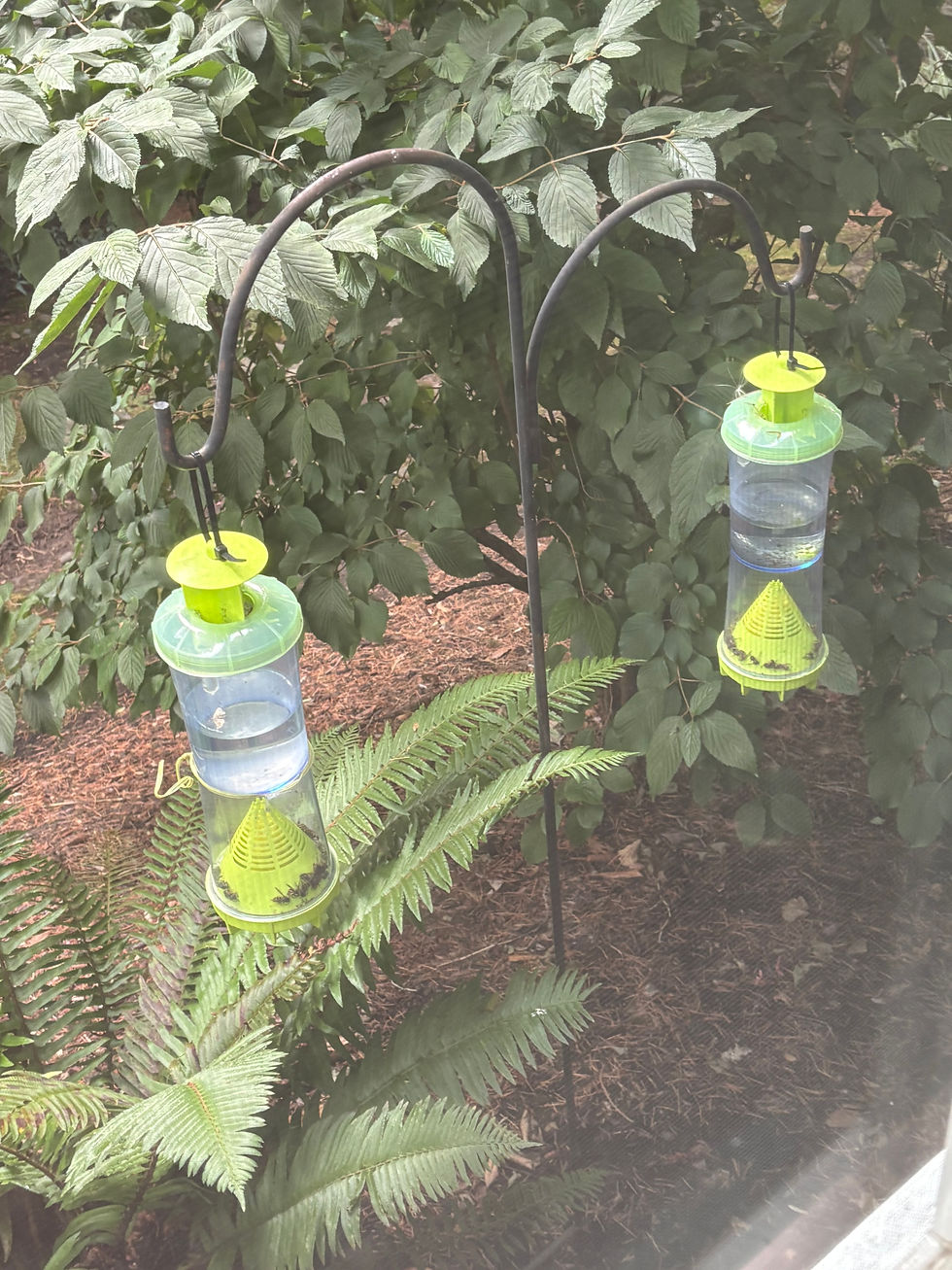
But even with the traps, they still seem to find us—especially when we're eating dinner on the patio and there's meat on the menu.
Thankfully, we haven't been stung this summer!
Along the way, I've learned quite a bit about wasps and what seems to attract them. I'm sharing what I've learned in case it helps other gardeners, patio diners and homeowners avoid an unpleasant encounter.
What I've Learned About Wasps
Wasps Need Water
Wasps are attracted to water, so don't overlook sources around your yard.
Things like:
Baby pools
Birdbaths
Standing water
Other containers that collect water
Keeping water sources clean and changing the water regularly can help reduce places where insects congregate.
Not All Wasp Nests Are the Same
Wasps can build nests in different places. Some species build nests in the ground, while others build nests in places such as eaves, rooflines, walls or other protected areas around your home.
So if you see wasps repeatedly flying into or out of the same location, pay attention. There may be a nest nearby.
Why Do Wasps Come to Our Patio?
One thing we've definitely noticed is that wasps seem particularly interested when we're eating meat outside. Wasps are attracted to protein, especially during certain parts of the season, so outdoor meals can become a magnet for them. We eat inside and enjoy happy hour and dessert out on the patio.
Our Wasp-Trap Experiment
The traps have definitely made a difference for us. Michael changes the attractant every couple of weeks, and the traps have caught a surprising number of wasps. But the traps haven't eliminated them completely.
If You Find a Nest...
After my experience last summer, this is one thing I'm not willing to experiment with myself. If you discover a nest close to a walkway, mailbox, patio or other area where people regularly walk or gather, be careful and consider calling a pest professional rather than trying to remove it yourself.
And if you do get stung, especially if you've been stung multiple times, keep an eye out for signs of a serious allergic reaction and seek emergency medical care if symptoms such as difficulty breathing, swelling of the face or throat, dizziness or fainting occur. Our neighbor and friend Barbara told me she has an epi pen since she's been stung several times in her life and the stings can become more dangerous.
"Dr. AI" says for a typical wasp sting, the goal is to reduce pain, itching, and swelling:
Wash the area with soap and water.
Cold compress or ice pack: Apply for about 10–20 minutes at a time, with a cloth between the ice and skin.
For itching: An over-the-counter 1% hydrocortisone cream or calamine lotion can help.
For pain: Acetaminophen (Tylenol) or ibuprofen (Advil/Motrin) can help if you normally can take them.
For significant itching: An oral antihistamine such as cetirizine (Zyrtec) or diphenhydramine (Benadryl) may help. Diphenhydramine can cause considerable drowsiness.
I've purchased all these things to have on hand in the case of another wasp attack.
Wasps generally don't leave a stinger behind, unlike honeybees. If a stinger is present, gently scrape it away rather than squeezing it.
If you've been stung multiple times...
Seek emergency medical attention immediately if someone develops trouble breathing, throat/tongue swelling, widespread hives, dizziness/fainting, vomiting, or other signs of a serious allergic reaction. Multiple stings can also warrant medical advice even when there isn't an obvious allergic reaction.
My Biggest Lesson
Last summer I learned the hard way that wasps don't appreciate being disturbed!
This summer we've been much more aware of where they are, where they might be nesting and what attracts them. The traps have helped, but we're still watching our patio and yard carefully.
Have you found something that works to keep wasps away from your yard or patio? I'd love to hear what you've learned.


Comments