
Foothills District: Let's Think BIG—but Let's Also Figure Out How to Make It Happen

Updated: Aug 19
In a nutshell: The Foothills District has tremendous potential to become a vibrant extension of downtown Lake Oswego and reconnect our community with the Willamette River. But turning that vision into reality will require more than attractive concept drawings. It will take a BIG vision, creative thinking, significant private investment, careful planning, and a realistic strategy for overcoming major infrastructure, environmental, transportation and funding challenges.
And most importantly, we need to make sure we don't create another “shelf plan” that looks great on paper but never gets built. That is what happened with the 2002 George Rogers Park Master Plan. After two years of community involvement and planning, the plan was never implemented because there wasn't funding available. Read more about the George Rogers Park experience here.
As Jeff Gudman has told me repeatedly:
“We need visionaries and pragmatics to pull this off.”
I agree.
Where We Are Today

The City is currently in the visioning stage of the Foothills District Plan Update. The goal is to explore how Foothills could eventually become an extension of downtown, with a walkable, mixed-use waterfront district, housing, public spaces, river access and improved connections to the rest of Lake Oswego.
The City's consulting firm recently shared three preliminary concepts:
Park Plaza
Downtown Plaza to Park
Park Promenade
These concepts explore different approaches to land use, circulation and connections between downtown and the river. You can view them here
The City says the project could ultimately unfold over approximately 30 years, similar to the way downtown Lake Oswego developed over several decades.
The City has also emphasized that these are not final development plans. The purpose right now is to dream, explore possibilities and gather public input before decisions are made. That is important—and I think we should take advantage of this opportunity to dream BIG.
My Biggest Concern: Let's Not Create Another Shelf Plan
After attending the City's July 9 Foothills Development Vision listening session, I left with more questions than answers.
I appreciated the opportunity to see the preliminary concepts and provide feedback. I also appreciate the work Jeff Gudman is doing on behalf of the Neighborhood Associations.
But I came away wondering: How do we make sure this vision is financially and practically achievable?
Before we spend years refining a vision, I believe residents should understand the major challenges that could determine whether the vision ever becomes reality. That doesn't mean we should stop dreaming. Quite the opposite.
It means we need both visionaries and pragmatists at the table from the beginning.
There Are Some BIG Obstacles
The Foothills District is a wonderful piece of property—but redevelopment will not be easy.
Some of the major challenges include:
Relocating the existing water treatment plant
Environmental remediation of the existing treatment plant site
Floodplain issues and mitigation
Existing PGE infrastructure
The railroad corridor
Highway 43 traffic capacity and access
Creating safe pedestrian and bicycle connections across Highway 43
Emergency access for police, fire and medical services
Adequate parking for residents, visitors and park users
Traffic associated with the water treatment plant and other businesses
Creating a welcoming and attractive entrance from downtown
Existing industrial and commercial properties whose owners may not want to sell
The need to attract multiple private developers rather than relying on a single developer
Creating a district that is safe and enjoyable for residents and visitors


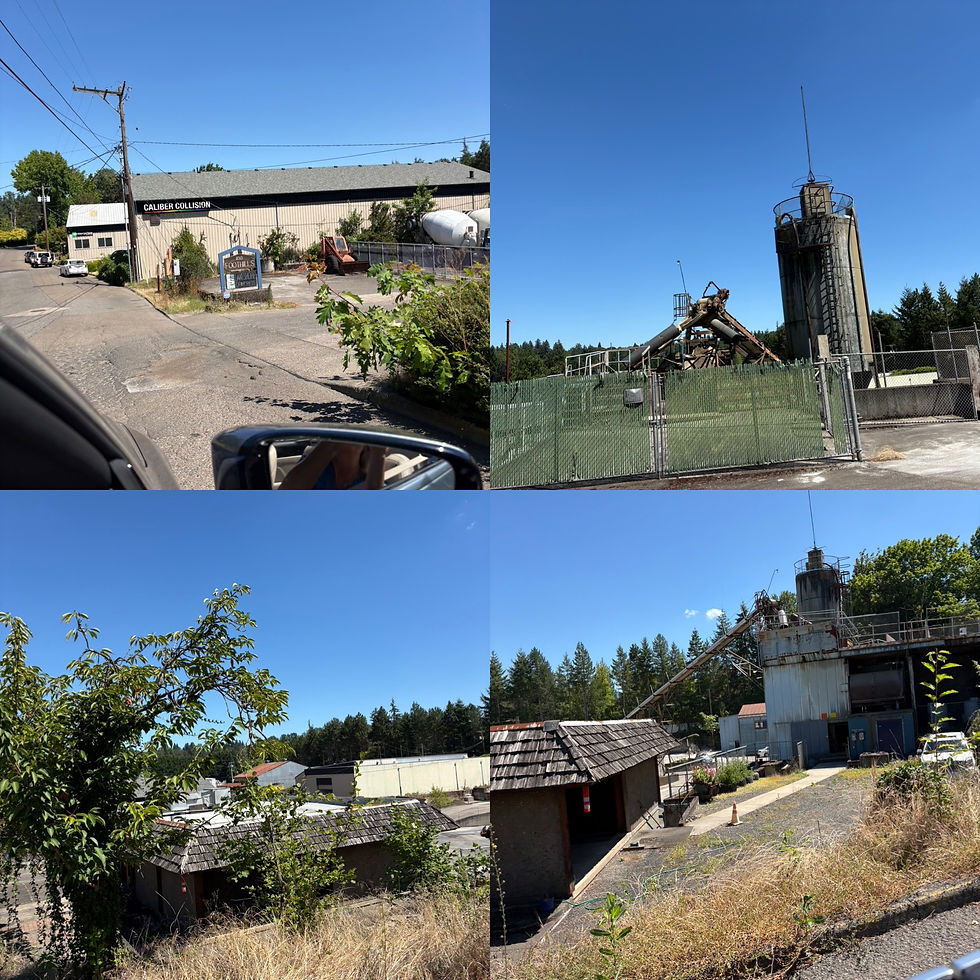
A neighbor on Nextdoor made this helpful comment about another obstacle

Another challenge: the timeline
The water treatment plant alone could take several years to relocate, followed by environmental work and other infrastructure improvements before some portions of the property are ready for redevelopment. This is a long-term project. That makes it even more important to get the vision and strategy right.
But Let's Look at What We Already Have!
One of the things that excites me most is that Foothills isn't starting from scratch.
There are already some terrific assets:
Foothills Park

Foothills Park is a gorgeous riverfront park with:
A dock and river access
Large grassy areas
Space for outdoor concerts
Picnic areas
Walking paths
The Veterans Memorial
A Bocce ball court
Bathrooms
Plenty of parking
Roehr Park
Roehr Park, next to Foothills Park, already has a dock and river access and is a favorite spot for locals who know about it. Could this become an even bigger destination for paddleboarding and kayaking? Could rentals be available there?
Could we make it easier for people to discover and use this wonderful river access?

The Willamette Shore Trolley
The trolley already provides a unique connection to Lake Oswego's history and the Willamette River.
Lake Oswego Community Rowing
The Charlie S. Brown Water Sports Center adds another recreational asset to the district.
Existing Businesses and Housing
Foothills already includes a mix of:
Oswego Pointe condominiums
Oswego Pointe apartments
Professional offices
The Foundry
Marine and boat-related businesses
Public Storage
Auto-related businesses
RV and boat storage
Industrial and service businesses
And there are major utilities and infrastructure already located here, including PGE substations and the City's wastewater treatment plant.
Let's build on these existing assets rather than starting over.
Now Let's Think BIG
I don't think the three preliminary concepts have yet given us the WOW factor that could make Foothills truly special. Maybe that's because we're still early in the process.
But let's think about what could make people say: “Wow. I want to go there.”
What could make someone walking downtown want to continue down to the river?
What could make someone living in Foothills want to walk or bike up to downtown?
What could make people from throughout Lake Oswego want to spend an afternoon there?
What about a truly memorable connection between downtown and the river?
There are examples around the world of creative ways to connect people with waterfronts.
Could Lake Oswego consider something extraordinary—aerial tram, funicular, pedestrian/bicycle bridge or another creative transportation solution?
Portland's Tilikum Crossing is an example of how a bridge can become more than transportation infrastructure—it can become part of the identity of a place.


Disneyland has a train from the hotels to the park.

I'm not suggesting we copy any of these ideas.
I'm suggesting we think at that scale.
What else could create a “WOW” factor?
What about:
A spectacular riverfront gathering space
Unique lighting or water features
Outdoor entertainment
Restaurants and food options along the river
A destination for paddleboarding and kayaking
Great walking paths
Separate, safe routes for pedestrians and cyclists
More trees and landscaping
Places for people of different ages to gather
Public art
Events and activities that bring people downtown and down to the river
Let's create something that feels uniquely Lake Oswego.
We Also Need to Think About Who Will Live There

The Foothills District could provide an opportunity to think differently about housing.
Lake Oswego has many residents who are aging in place but might consider moving if there were attractive housing options that fit their needs and stage of life.
There are also teachers, City employees and other workers who work in Lake Oswego but may not be able to afford to live here.
Could Foothills include housing that works for:
Older adults
Young professionals
Teachers and City employees
Young families
People who want to downsize
People who want to live near parks, restaurants, transportation and the river
There are interesting examples around the world of intergenerational housing and communities that create shared spaces where different generations can interact.
Why not think creatively about what Lake Oswego's next neighborhood could look like?
Parking Needs to Be Part of the Vision
One issue that came up at the July meeting was parking.
City staff explained that Lake Oswego currently does not have minimum parking requirements and that the market will determine how much parking is provided.
That prompted questions from residents.
I believe parking needs to be addressed before major redevelopment occurs—not after residents discover that there isn't enough. The City could establish a specific parking lot within Foothills District as part of the infrastructure.
We should think carefully about parking for:
Residents
Guests
Visitors
Park users
Employees
Businesses
If we want Foothills to be a vibrant destination, people need to be able to get there and park—or have convenient alternatives to driving.
We Need Zoning and Development Rules That Fit the Vision
If we're going to create a new neighborhood, we should establish the rules before development occurs, rather than allowing development decisions to determine what the neighborhood becomes.
The goal should be to create zoning and design standards that support the community's vision while still giving developers enough flexibility to invest.
This is an opportunity to learn from what has worked—and what hasn't worked—in other parts of Lake Oswego.
What About Restaurants?
Lake Oswego has beautiful waterfronts, but relatively few opportunities for people to enjoy a meal directly along the Willamette River.
Could Foothills eventually become a place where people come specifically for riverfront dining?
Could we create a restaurant district?
Could food trucks or smaller food concepts provide a lower-cost way for entrepreneurs to test ideas? West Linn and Hood River have examples of creative food truck and gathering concepts.
Again, let's think creatively.
And Let's Make It Beautiful
Foothills is currently largely industrial.
Imagine replacing some of that industrial landscape with:
A substantial tree canopy
Beautiful streetscapes
Riverfront paths
Public gathering spaces
Native landscaping
Public art
Parks and plazas
Places to sit and enjoy the river
The transformation could be remarkable.
But Here's the Pragmatic Part: How Do We Pay for It?
This is probably my biggest question.
The City has explained that it is too early to know exactly what projects will ultimately be built or what they will cost.
A potential major funding mechanism is urban renewal/tax increment financing (TIF).
As I understand it, this would not mean an increase in the property tax rate. Instead, future growth in property tax revenue generated within the urban renewal area could be used to fund infrastructure and improvements within the district.
The important point is that this involves a tradeoff: future tax revenue generated in the district would be dedicated to the urban renewal area while the district is in place rather than immediately flowing to the City's General Fund and other taxing districts.
Eventually, when the urban renewal district ends, that increased tax base becomes available again to the General Fund and other taxing districts.
Other funding could potentially include:
Developer contributions
System development charges
Metro funding
State or federal grants
Other public/private partnerships
The City will ultimately have to determine which combination makes sense. I'm glad Jeff Gudman is involved. He's a former City Councilor and expert in financial planning. He's a dedicated LO resident who ran for State Treasurer.
My concern is simple:
I don't want Lake Oswego residents to be surprised later by the cost of this vision.
If we don't want to rely on another citywide bond or significant new taxes to fund the infrastructure, then we need to figure out how the investment can generate enough economic activity and tax revenue to support it.
That means developers need to see an opportunity to make money, and residents need to see a neighborhood they actually want.
That's the win-win-win: Residents + City taxpayers + Developers
We Need People Who Know How to Get Funding
One thing I hope becomes a major part of this process is identifying people who know how to find and secure funding from:
Federal programs
State programs
County resources
Metro
Grants
Public/private partnerships
Developer investment
Let's not assume the only answer is another bond paid for by Lake Oswego taxpayers.
There may be creative funding opportunities we haven't even explored yet.
What I Learned From the City
After the July 9 meeting, I exchanged questions with City Long Range Planning Manager Erik Olson and also talked with Jeff Gudman.
The answers helped clarify where the City actually is in the process.
This is still visioning—not a final development plan.
The City has not yet decided exactly what will be built.
It also hasn't determined the funding plan for individual projects because those projects haven't been selected.
The expected implementation timeline is roughly 30 years.
There will be additional opportunities for public input before anything is adopted.
And the City wants residents to dream big at this stage rather than limiting the vision based only on today's obstacles.
I understand that approach. In fact, I agree with it.
Let's dream big. And let's also make sure we're asking the hard questions along the way.
What I Hope Happens Next
I would love to see the next phase of this process include more than flat concept drawings. I think residents need to see realistic 3D visualizations showing:
Building heights
Streets
Grade changes
Floodplain modifications
Parks
Walking paths
Bicycle routes
Parking
Connections to Highway 43
Connections to downtown
Views toward the river
How the district would actually feel at street level
That would make it much easier for residents to understand what we're talking about.
And I'd like to see the City continue to explain the major financial and infrastructure challenges alongside the vision.
Let's Get Excited About Foothills—But Let's Get Realistic, Too
I don't want to be the person who says, “We can't do that.”
I want to be the person who says: “What if we could?”
What if Lake Oswego created an extraordinary riverfront district?
What if downtown and the Willamette River were truly connected?
What if Foothills became a place where people wanted to live, work, walk, dine, paddle, gather and spend time?
What if we created something that people throughout the region wanted to visit?
Let's think BIG.
But let's also ask:
How much will it cost?
Who will pay for it?
How do we attract the right developers?
How do we protect taxpayers?
How do we make sure there is adequate parking and transportation?
How do we solve the Highway 43, railroad, floodplain and infrastructure challenges?
And perhaps most importantly:
How do we make sure this vision actually gets built?
We have a rare opportunity to shape one of the few remaining areas of Lake Oswego where an entirely new neighborhood can be created. Let's make it extraordinary.
But let's also make it realistic, financially sustainable and something the community can actually support.
We need the visionaries.
We need the pragmatists.
And we need both working together.
Keep Track of What's Happening
The Foothills planning process will continue through the fall. The City's recently announced schedule includes:
September 22, 2026 – Foothills Community Advisory Committee Meeting #8
October 20, 2026 – City Council Study Session
October 26, 2026 – Planning Commission Work Session
The previously scheduled August City Council and Planning Commission meetings were postponed until October.
If you care about the future of Foothills—and the future of Lake Oswego—now is the time to pay attention and participate.


Comments