
14 Simple Things We Learned at Lake Oswego’s Emergency Preparedness Fair

Updated: 60 minutes ago
Some of the simplest things we can do may make the biggest difference in an emergency.
On September 24, Michael and I attended Lake Oswego’s Emergency Preparedness Fair at City Hall. We came away with lots of practical ideas—and a renewed appreciation for how important it is for neighbors to be prepared to help one another.
Here are 14 things we learned that every household and neighborhood can do:
1. Put an “OK” or “HELP” sign in your window

After a major emergency, emergency responders may not be able to get to every home right away. A simple sign in your window can let neighbors and responders know whether you are OK or need HELP.
2. Know the four households closest to you
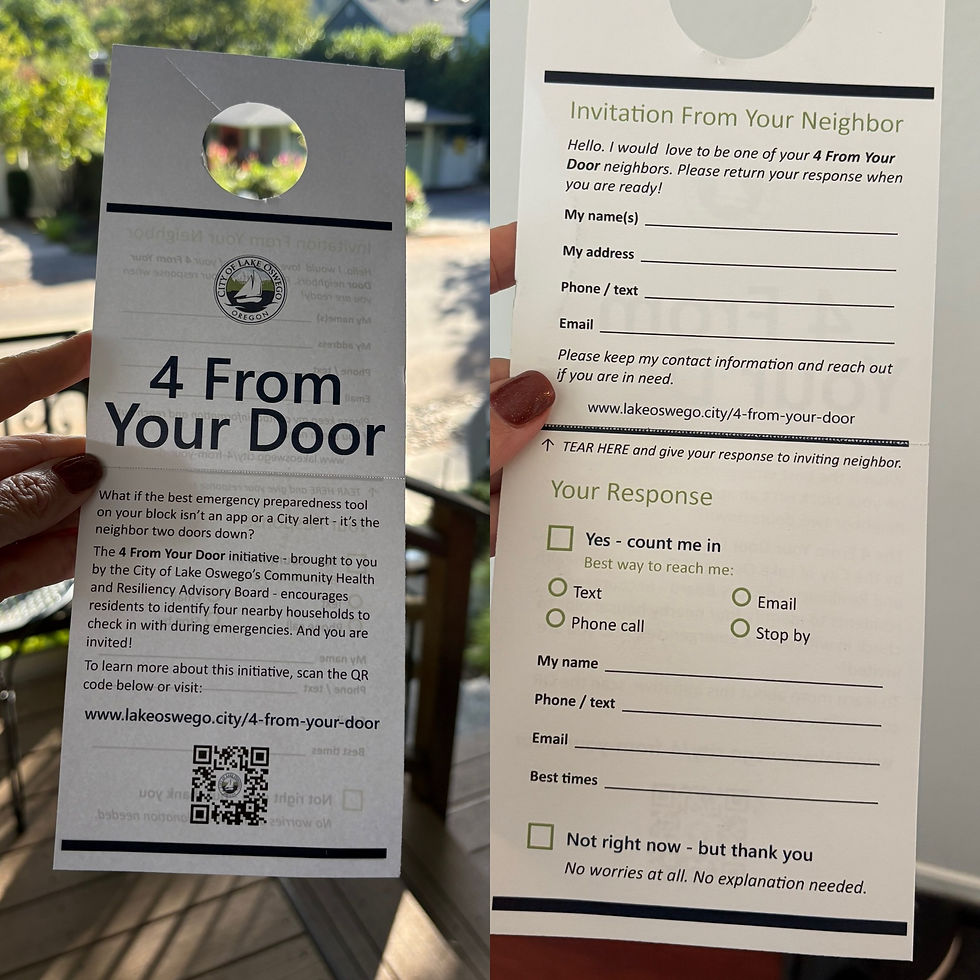
Lake Oswego’s “4 from Your Door” encourages us to know and exchange contact information with the neighbors around us. In an emergency, the people closest to you may be the first ones who can check on you or lend a hand.
3. Know how to turn off your water

Do you know where your home’s main water shutoff is—and how to use it? Knowing how to quickly turn off your water could prevent additional damage after an earthquake or other emergency. You need this blue tool that you can get at Ace Hardware or Home Depot.
4. Know how to turn off your natural gas

It is also mportant to know where your natural gas shutoff is and how to turn it off if necessary. Don't turn the gas back on yourself after an emergency; a qualified professional should do that.
Also learned that for free NW Natural will come out to your home to do a gas inspection as a prevention safety measure.
5. Store enough water for two weeks

Water is one of the most basic—and most important—things to have on hand. Emergency preparedness guidance recommends having enough water for two weeks. For you, your family and your pets. There was a line because the City was giving out large water storage jugs and a portable plastic bag for water. They also had a handout about how to access water from your water heater.
6. Be “2 Weeks Ready”
The goal isn't just having a few emergency supplies. “2 Weeks Ready” means being prepared to take care of yourself and your household for two weeks if normal services aren't available.
7. Have a printed evacuation map
Don't assume you'll always have your phone, internet or electricity. Having a printed evacuation map and knowing multiple ways out of your neighborhood can be especially important during a wildfire, earthquake, flooding or other emergency.

Know who the medical professionals are in your neighborhood
Do you know if there are doctors, nurses, EMTs or other medically trained people living nearby? Knowing who has medical expertise in the neighborhood could be invaluable when professional responders are stretched thin.
9. Sign up for emergency alerts
Make sure you are signed up to receive City and emergency alerts. In a rapidly developing situation, timely information can make a big difference.
10. Know how to fill and place a sandbag
We learned that even something as simple as knowing how to properly fill and place a sandbag—and where to get sand—can be important when flooding is a concern. Ranger Ben and the LO Public Works team explained that sand is available at Hazalia field. They had a handout on how to fill the sandbags.

11. Have neighbors who can communicate by radio
Our neighborhood recently received a City-approved grant to purchase FRS/GMRS radios and have neighbors certified and trained to use them for emergency communications.
A big thank-you to Michael Schmidt, our OTNA Board member, for putting together the grant request and to Phil Rossi, an FRS/GMRS radio expert in our neighborhood, for helping us move this forward.

We also appreciate Dennis Milosky, Evergreen Neighborhood Association Chair, and his wife, Laura, who leads emergency preparedness for Evergreen with Carl Mower. They shared information about their neighborhood's grant and helped us to pursue a grant radios for Old Town. And thank you LO for offering these grants!
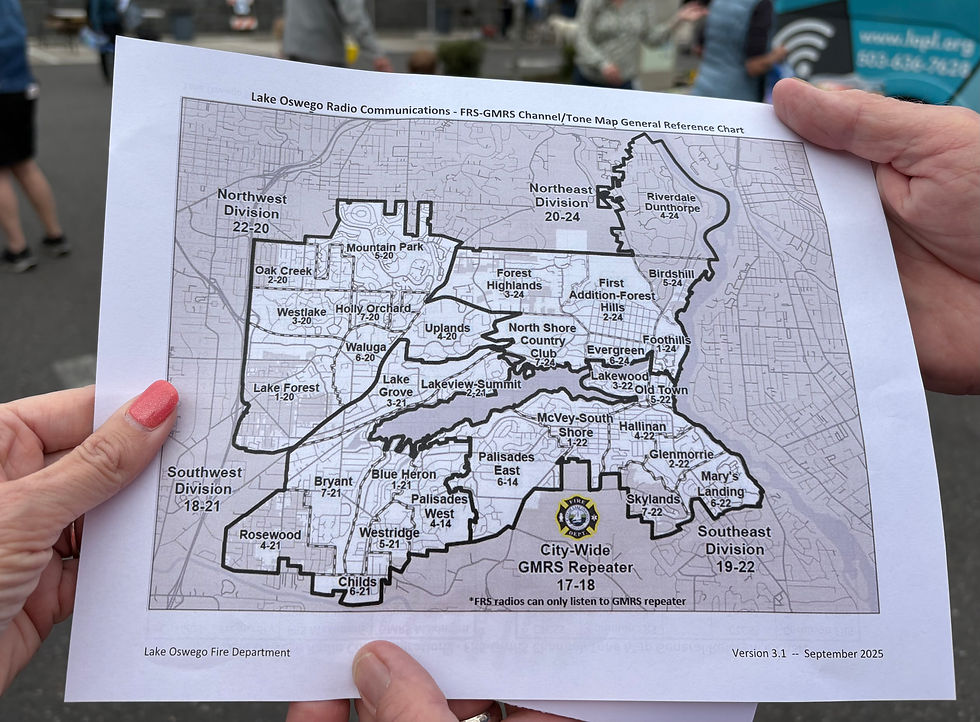
12. Get to know our emergency responders
We were also reminded how fortunate we are to have people in our Lake Oswego fire and police departments who respond when our community needs help.

Being prepared ourselves doesn't replace professional emergency response—but it can help us take care of one another while responders are dealing with the most urgent situations.
13. Visit PrepLO
There is a tremendous amount of emergency-preparedness information available through PrepLO, Lake Oswego's emergency preparedness program. So many volunteers have contributed to this: www.PrepLO.org
They've brought a lot of useful information together in one place, making it much easier for residents to figure out what we should do before an emergency happens.
14. Join us at the Old Town Neighborhood Annual Meeting
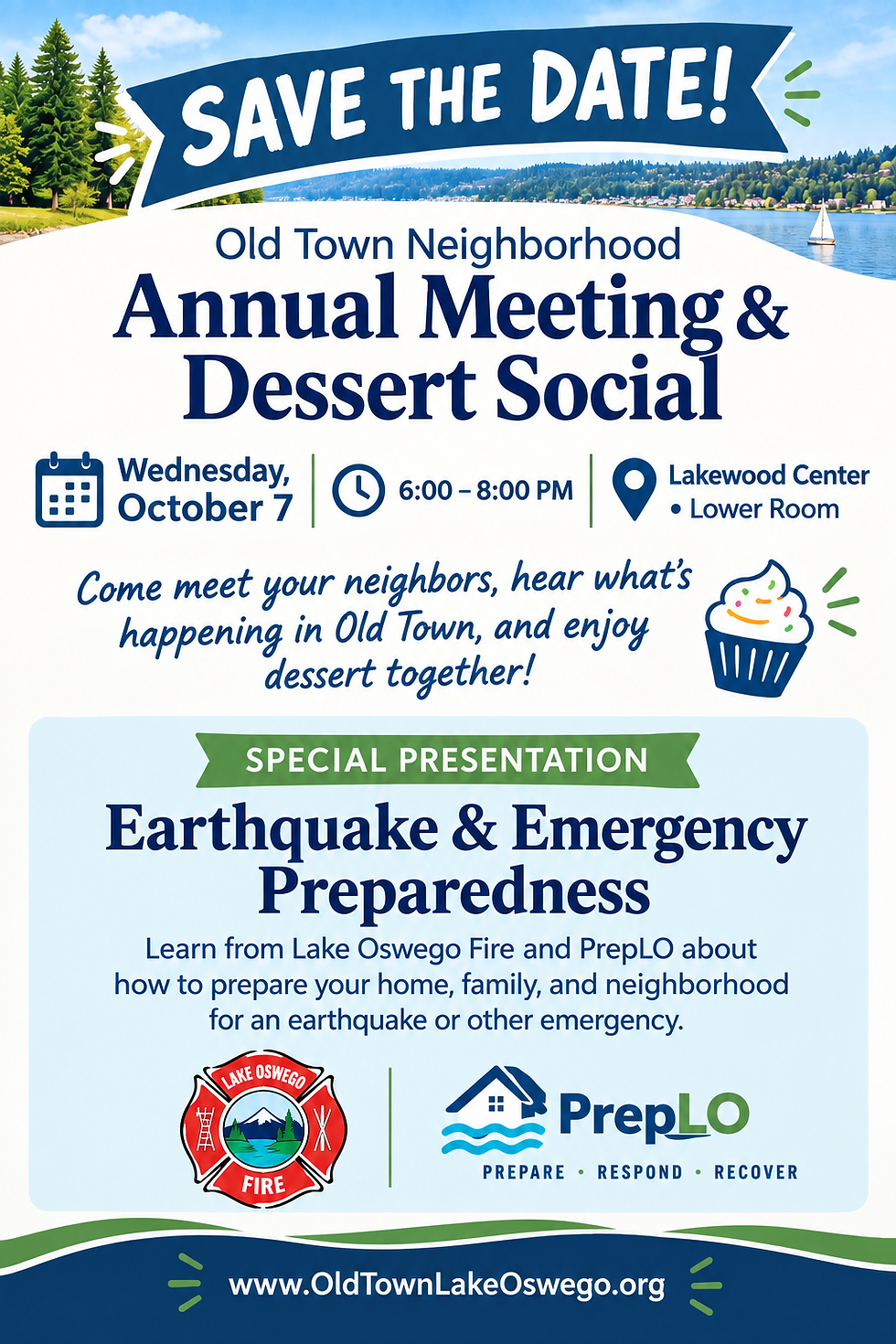
At our Old Town Neighborhood Association Annual Meeting on October 7, we'll hear from Lake Oswego Prep and the Lake Oswego Fire Department about preparing for some of the emergencies we could face here—including an ice storm, extended power outage, earthquake or flooding. We hope you'll join us.
The biggest takeaway from the Emergency Preparedness Fair was that being prepared doesn't have to be complicated. There are many simple things we can do now—before an emergency—to make our households and our neighborhood safer and more resilient.
And perhaps most importantly, preparedness is something we can do together as neighbors.


Comments